It does not matter how slow you go so long as you do not stop.

-Wisdom of Confucius

_______________________________________________________________________________________

Sunday, 6 July 2014

历史文化名城 · 阆中 · 孔家大院 ( 2 )

The Langzhong city, situated in the Sichan province of China, is a ancestral location of my family. Descending from my mother's forefather, Confucius, the 66 generation of the Kong line resided in this particular city. This old house has been constructed for roughly 300 years, every carve embossed on the wall containing the history and culture of our ancestry.


http://www.xcar.com.cn/bbs/viewthread.php?tid=2377517&page=18
孔家大院

孔家大院修建于清康熙年间,为孔子第66代孙所建的住宅,已有320多年历史。该院坐南朝北,由两正院一后花园18间房屋组成,左右对称,中间为主庭,东西两侧为花厅,占地300余平方米,建筑布局为四合院小天井双坡青瓦屋面的穿逗结构,门窗雕花,正庭大梁上有太极图与龙纹彩绘,是典型的川北古民居大院。

明、清时,孔氏为大户人家,以教书为生,兼营其他产业,后家道衰落。1939至1942年,时任川康建设期成会阆中办事处主任的张澜先生,曾在此设署衙办公和居住。
     
地址:阆中古城白花庵街10号
电话:0817-6229890 
门票:3元 


[ Last edited by 来了又走了 on 05-11-10 at 19:35 ]


http://www.xcar.com.cn/bbs/viewthread.php?tid=2377517&page=21
资料:

孔氏族人,子孙繁衍,氏族昌盛,延续至今,共有82代,历经2550年。根据“孔子世家谱续修工作协会”会长孔德墉提供的数字,目前孔子后代接近400万人,他们分布于海峡两岸及海外,其中大陆约300万人。

阆中这一支孔子后裔,是怎么来的呢?据《孔子世家谱》记载:孔子52代孔之升从山东曲阜迁居陕西华原(今陕西耀县)。公元1677年,65代孔衍康奉朝廷之命,入川平定吴三桂叛乱,当时平叛已进入第4年,战争异常激烈,该支武官较多,其中多人战死沙场,孔衍康也为国捐躯,遗体运回阆中,安葬在较场坝。4年后平叛结束,66代孔兴石即定居阆中,他的两个儿子的后裔即今天毛家巷孔姓和屏江街孔姓。孔姓家族在阆中城内修有多处大院,包括至今保存完好的孔家大院。上个世纪30年代,阆中这一支孔姓家族在世男性为286人,现在估计近2000人,子孙遍布全国和海外。

从清代以来,阆中这一支孔姓家族不乏杰出人物,如反袁司令孔宝庆,牺牲在阆中西门外;广东巡检孔昭堪,其夫人为著名诗人梁清芬。近现代更是人才辈出,在科技教育界的专家学者达60余人之多,较知名的有现定居美国的原台湾新竹清华大学教授孔筱芳,有阆中中学创始人、省政协委员的孔震生,华西医科大学副校长孔繁成,中国航空航天专家、四川省人大第七、第八届常委孔繁庚,公路专家、京津高速公路主设计师孔祥金等,还有多人定居海外,在学术上均有建树。

Leonardo da Vinci

Throughout history, many great men and women made extraordinary contributions to our knowledge and understanding of the world around us as well as ourselves, explaining how things came to be or inventing a new gadget, making life so much more simple for us. Because of Galileo Galilee’s modification to the telescope, we can study the universe more clearly. Thanks to Marie Carrie we know now some basic principles of radiation and we can make sturdier bridges and buildings with accurate right angles because of the discovery of the Pythagorean theorem by Pythagoras. Yet, above all Leonardo da Vinci is considered one of the most important and influential figures throughout history.

Born out of wedlock on April 15, 1452 to Peiro da Vinci and Caterina in Vinci, Florence, Leonardo di ser Peiro da Vinci is considered the archetype of a Renaissance man; he is a man with “unquenchable curiosity and feverishly inventive imagination”. Da Vinci was a polymath, although he is usually regarded as a painter, he also excels in many other subjects such as math, architecture, music and engineering; some say that that he is the most diversely talented person who ever lived. He worked as an apprentice for much of his earlier life and his most renowned pieces are probably the Mona Lisa and the Vitruvian Man.

In 1976, Christiaan Barnard performed the first successful heart transplant, based on da Vinci’s studies on the heart valve. In December 1903, the Wright brothers first launched their aircraft, but Leonardo da Vinci’s studies of birds and wings provided a base for the aircraft. Da Vinci had a dream where someday men would be able to fly just like birds do and he spent years studying birds. Although that dream couldn’t be realized in the time of da Vinci, without him, the first aircraft might have been invented much later. He also had many designs for an adding machine, tanks and submarines.

Da Vinci was a curious person, who often asked many questions.
He once wrote:
“I roamed the countryside searching for answers to things I did not understand. Why shells existed on the tops of mountains along with the imprints of coral and plants and seaweed usually found in the sea. Why the thunder lasts a longer time than that which causes it, and why immediately on its creation the lightning becomes visible to the eye while thunder requires time to travel. How the various circles of water form around the spot which has been struck by a stone, and why a bird sustains itself in the air. These questions and other strange phenomena engage my thought throughout my life.”
Because of his curiosity on why the sky was blue, he concluded that it was the molecules in the air scatter blue light. He even concluded that the moon reflected the light of the sun.

He also made many connections with seemingly unrelated topics, such as his connection with horse riding and gears, which later became the first bicycle. In one of his notebooks, da Vinci wrote, “connecting the unconnected” which is a way for him to think creatively. Once when da Vinci was standing by a well he noticed that a stone dropped into the well at the same time a church bell rang. Observing how the ripples spread out and connecting that sound also spread out, he made the conclusion that sound travels in waves.

Da Vinci also took many risks, such as experimenting with new paint techniques. When he was painting the Last Supper, he avoided layering plaster on the wall before painting with water colors, and instead, made his own fresco, but his experimentation with paint on the masterpiece failed miserably. Pigments fell off of the painting, inviting decay began to disintegrate the fresco and the paint faded considerably. Leonardo da Vinci’s also studied rivers, and by doing this, he believed that the earth was older than what the Bible said, therefore contradicting the Bible and could have been accused of heresy at any given moment and killed. He believed that ancient oceans left marine fossils on the mountains and not Noah’s Ark.

Da Vinci died on May 2, 1519 but he is still remembered today. Although some of his studies weren’t accurate, they all became bases for many of our new discoveries and innovations. Some say that Leonardo da Vinci was a man born out of his time and with so many contributions he made to our world, he could be just that.

Saturday, 5 July 2014

Ancient Greeks in Modern Life

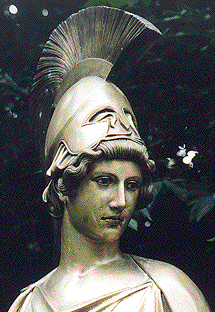
The ancient Greeks speak of legendary humanoids and creatures, mortal and immortal. They have the invincible gods and goddesses, like the great Athena and the powerful Zeus, and the mortal humans alike. Now, we have rich businessmen, creative architects and those who live as the wind blows. These two completely different worlds, one with knives, the other with guns, may seem opposites, but in the furthest depths of their way of living, lies a few personality traits that seem to be passed on generation after generation.

Venturing into the different realms of monarchy and democracy, the unique rulers set very similar laws. No man, woman, or child should commit incest (crime of marrying a close relative). This crime is punished with separate ways, but punished nonetheless. The Greeks will be tormented with guilt by the Furies, a group of spirits that cause chaos to a victim. In the modern era, it is punished by being sentenced to prison.

We have in a way become more civilized, killing is prohibited and there are no exceptions. In ancient Greece, avenging a father’s death and fulfilling a mission is not punished, in fact, it is punished if it is not done. For example, when Heracles needed to slay the Minotaur to fulfill one of his 12 labors, it was not considered a death crime and blood-guilt. Usually, revenge is sprouted by jealousy of another family and betrayal. When Athamas, the king of Boeotia, left his wife, Nephele, to be with Ino (a princess), Nephele asked the goddess Hera for help. Hera drove Athamus mad and made him kill Ino and his sons, making him believe that he was killing a deer.

Greed has been and always will be a problem in humanity. A man always seeks for more and will do anything to achieve it. When Pelops wanted to marry Hippodameia with a contest, he bribed the servant (Myrtilus) of his opponent to betray his master. The servant hijacked his master’s chariot and so Pelops won. On the way home, he killed Myrtilus so that Myrtilus will not pose a threat to him.

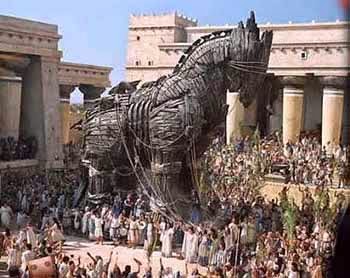
The ancient Greeks did indeed have gods and goddesses which this religion has now turned into myths. These gods and goddesses dispensed justice, wrath, greed and revenge on mortal delinquents. Though they do not appear in mortal life anymore, they are shown by abstract things like karma, luck, fate, etc. When people are in search for more space, they often commence war for the land, like the raging war of Troy and the war between the Russians and Ukraine. 

There are certain traits that define humans, its what makes us who we are. No matter how much we evolve, the basic personalities remains the same. 

Thursday, 3 July 2014

Alexander the Great

In 334 BC, the Macedonian Empire grew; its borders consisted of Greece, Egypt and present day Pakistan. The Macedonians conquered the Achaemenid Empire or better known as the Persian Empire, the largest empire at that time. The emperor of the Macedonians at the time was Alexander the Great. Under his lead, the Macedonians became one of the largest empires in the ancient world and his army was never defeated, earning his reputation as the greatest commander in history. Alexander the Great became as legendary as many mythical hero like Achilles. Even today, military leaders compare with him and his strategies and tactics are taught in military academies.

Alexander III of Macedon was born on 356 BC to the Philip II of Macedon and Olympias (who is attributed with the phrase “divide and conquer”), princess of Euprius in Pella and was tutored by Aristotle from the age of twelve until he was sixteen. He ascended to the throne at the age of twenty after Philip II was assassinated. In 334, Alexander the Great invaded the Persian Empire and after a few attempts, killed their king, Darius III and declared himself as the “King of Kings” the equivalent to an emperor. Alexander also became Pharaoh in Egypt, and declared that he was the son of Zeus Ammon, as Egyptian Pharaohs were believed to be sons of gods. As he made his way towards India, he contracted a fever and soon afterwards died in 323 BC.

As Alexander the Great conquered and founded many cities, he also began Hellenizing and spreading Greek culture and philosophy. Hellenic influence spread throughout the lands under the rule of Diadochi. An abundance of Greek statues, architecture and inscriptions have been found many cities around the Middle East and Asia. Many cities were named Alexandria after him and one city, Bucephala, was named after his favourite horse, Bucephalus. The spreading of the Greek language also introduced Greek literature to the Persian Empire, and influenced the philosophy and writing of the region. Even coins now have portraits on one side and important scenes.

Alexander also helped the economy for the ancient Macedonians. When he tried unifying the Greek and the Persian empires, he subsequently created a trade route between the two empires and commerce between Europe and Asia. To encourage commerce, Alexander standardized currency, making it much easier to do trade and business between these two regions. Encouraged, merchants travelled to the empires to sell their products in cities and towns.

Alexander the Great died at the ripe age of 33, yet his legacy continues on today. Even as we speak the English language, we are carrying Greek words in our vocabulary such as in alphabet, optician, psychology, microscope and telepathy. After the death of Alexander the Great, many other Roman and Greek conquerors such as Julius Caesar continued his attempt in Hellenizing, forever changing our modern world.

Tuesday, 1 July 2014

Where Heaven Meets Earth

Somewhere, there is a tiny world, where hillsides are painted green and stained with spice. Hills, which look like giant sleeping turtles.  The lush grass is spread around the hills like a blanket. It is soft like a lamb's wool and rich with hidden wonders. Priceless treasures like the earthworms who fertilize the field, to the rare emerald swallowtails. In the caves of the hummock, lie resting spirits keeping the valley safe. Their mere humble presence keeps the place humming with warmth and peace.

The mountainside dips down into a stream, the elixir of life cascading down. The glistening water is refreshing and gently flows around the whole area. The flow of the water creates a cleansing ritual, renewing the land and ridding the bad. It covers the unique underwater world of seafood and protects it. The water paints the image of the sky, capturing all the right shades and shapes. Pond lilies surround it like wings of an angel, each flower a different hue from the rest.

The tropical sun smiles upon the meadow and its exotic flowers, filling them with heat. Not too hot, but not to cold. The willows with their long summer icicles sway with the colours of the wind. With each clump o leaves that look like a waterfall, it creates a safe haven for animals seeking shelter or shade. The sweet aroma of flowers create a heavenly bliss. No, this is not Shangri-La. It is called Pratumia, found where heaven meets Earth.

A doe grazes through the field with her fawn. Her grace is a crystal jewel in the grass. Snow white rabbits prance around the lilies by the lake. Life here is simple, endless water and boundless food. But Pratumia isn't simply a meadow. Every night, something peculiar happens. The moon lights up the sky with a calming glow, a wake up call. The hills move. The Nysagi are small creatures, the size of a thumb, with pointy green heads, and eyes that reach into their souls. Their arms are petite and nimble and their stout legs are made of dirt. They lead an easy life; as they wake up each night, they patch up the bald areas, refilling the scenery with plantation. Their whispers are carried into the night.

The Elfra are bigger creatures with a head full of thick locks. With their eyes closed, it is difficult to find his face, but during the night, his features stand out. They are old souls, they have seen the beginning and will live to see the end. Their head gives shelter to many different critters, which are fast sleep at the moment. They move slowly, their rough brown bodies are bulky and silently creak as they move. Their thousand arms reach towards the moon, casting shadows on the ground. They sky is dark but natural lanterns light it up, leading a path for the shifting world.

The sleeping slumbers are slowly woken up by the sweet songs of the nightingale. The Nysagi and the Elfra are put to rest, lulled by the cooing of a dove and the golden melody of life.

Saturday, 24 May 2014

The Alchemist

“Everyone on earth has a treasure that awaits him…But, unfortunately, very few follow the path laid out for them- the path to their Personal Legends, and to happiness. Most people see the world as a threatening place, and, because they do, the world turns out, indeed, to be a threatening place. “
   —Paulo Coelho


“I failed my way to success.”
   — Thomas Edison


http://en.wikipedia.org/wiki/The_Alchemist_(novel)

This book starts off with a shepherd boy named Santiago who had a dream about the Pyramids of Egypt. Seeking help from a gypsy, she revealed that he was to find treasure in Egypt. Wondering how he was going to get there, Santiago met an old king who introduced him to the idea of a “personal legend”; it is the reason you are here on Earth and the reason you are born. This book recounts the journey of how a shepherd boy realized his personal legend.

The old king told Santiago that everyone has a personal legend. It is like the Chinese saying “If I was born, then I must have a useful gift.” Everyone is here for a reason and is born to contribute something. Our personal legends could come in a form of a dream, an ambition or a goal. However, many people can’t realize their personal legends because they never tried, caused by fears.

In the book, it mentions a baker who’s dream is to travel and explore the world, but he stays in his town because he is afraid that the people would mock him, after all, bakers are more important than travelers.

When Santiago fell in love with a girl named Fatima, he was about to quit his personal legend to stay with her, to make sure she was safe. Although he did not fear failure, he feared that by leaving the person he loved, he would hurt her, and therefore debated with himself whether or not he would continue his journey.

Once Santiago worked for a crystal merchant whose dream is to visit the holy city of Mecca, but he is afraid that the city wouldn't be as he expected and he would be disappointed. He is afraid that if his dream were realized, he wouldn't have any more reason to keep on living. He also tells Santiago that he is afraid of change. He isn't sure about what was going to happen if he fulfilled his dream.

The book also touches on “beginner’s luck” which means that at the beginning, it is easier to have small successes, however, as we journey through our personal legends, the Spirit of the World will test us to see if we mastered the lessons we learned along the way. When facing these challenges, we usually back down.

Once, when there was a competition for Urban Voices, a poetry competition for elementary and middle school students and presented with the chance, I instantly saw myself sweating over my poem day and night. Daunted by this, I refused to participate, saving myself from the trouble of writing a poem, and also losing a chance at winning.

When confronted by the fact that he had to travel the desert, Santiago had second thoughts on travelling finding his personal legend. It could result in his death and he was in unfamiliar territory. On top of it all, there was talk about tribal wars in the desert. Yet he was still capable of overcoming this fear and continuing on with his personal legend.

In the story, Santiago’s sheep is a metaphor for normal people, or people who didn’t realize their personal legends. They are content with their lives, just grazing. They are satisfied with their peaceful lifestyles. They dream of having so much more, but are fine if they don’t get it.

How many times have we looked at someone who was richer, smarter or more talented that we are with envy? Yet, even experiencing these feelings, we do nothing to change that fact.

Through the journey of realizing his personal legend, Santiago was able to learn about the Soul of the World and how to overcome obstacles. Perhaps, as the story of Santiago, everyone can find and achieve their own personal legends.


"There is one great truth on this planet: whoever you are, or whatever it is that you do, when you really want something, it’s because that desire originated in the soul of the universe. It’s your mission on earth… To realize one’s Personal Legend is a person’s only real obligation. All things are one. And when you really want something to happen, the whole universe conspires so that your wish comes true."

Friday, 23 May 2014

Kidnapped by Choice

In Greek mythology, Persephone is Demeter and Zeus’ daughter. Demeter is the goddess of crops and the fertility of the world. One day, as Persephone, a beautiful maiden, was picking flowers in Crete, Hades’ horses and chariot hurtled out of the ground and had her kidnapped. He had chosen Persephone to be his wife and the queen of the underworld.

No one wanted to pass on the news to Demeter, and Zeus did not wish to bring offence to his brother, Hades. 

When Demeter noticed her missing daughter, she began searching for her beloved, and ignored her duties as a goddess. Crops failed to grow and there were no births of birds, fish, animals, no one. The humans prayed to the gods for fortune, and when they were on the verge of extinction, Zeus finally decided to tell Demeter. 

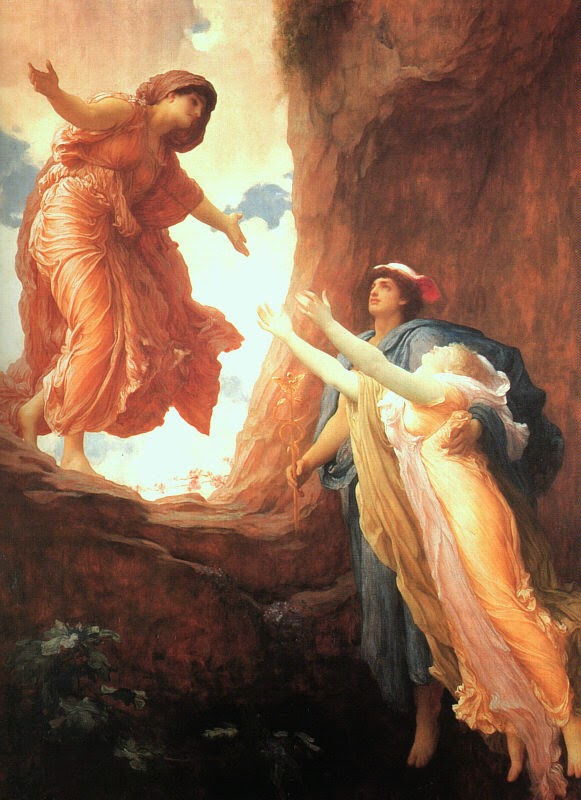
Zeus sent Hermes to tell Demeter the news and Hermes told her where her daughter had gone. In order to be able to leave the underworld, one mustn’t eat or drink anything from the underworld. Unfortunately, Persephone ate 3 (some say 4 or 6) pomegranate seeds. After heavy bartering and bargaining, Persephone was allowed to go back to the human world – on the condition where she must return to Hades for as many months as the eaten seeds.

In most versions of this myth, Persephone was indeed captured by brute force, but according to some other versions, she chose to go down with Hades herself. Perhaps she enjoyed her life with her new husband and her new kingdom. There is one myth which tells that Persephone trapped Theseus and Pirithous, two mortals who ventured into the underworld to rescue her. She stuck them to a golden chair and served them a splendid delish, therefore cursing and binding their souls to the underworld. In some lesser known myths, Persephone seems rather content with her life as the queen of the underworld, and was ready to protect it from intruders. She might’ve even been eager to return to the darkness after her time allowed dwelling on Earth.

Perhaps, both these versions prove true. Persephone is often depicted as a victim of Hades, snatched away forcefully. Although maybe during the time which Demeter searched desperately for her, she began to grow accustomed to her new surroundings. Since she figured that she wouldn’t be able to leave the underworld, Persephone decided to settle in and make a living there. Often, changes just need to be accepted, so perhaps later on, Persephone chooses to stay with Hades and soon began to love her new kingdom, new powers, and new realm of darkness.

“After all, it is out of darkness that the new life of spring emerges, out of dark soil that spring bulbs send their green shoots, and out of the hidden womb that babies push their way” – Classical Mythology: Myths and legends of Ancient Greece and Rome. Persephone possibly enjoyed living in the underworld instead of dreading it.

At first glance, new things seem dangerous and uncertain. They have unknown, unforeseen consequences and/or profits. It is a gamble. Often are people blinded by their comfort zones and paradigms, and refuse to see things with a new light. It is only after accepting the change, will the wholly truth and benefits come up.

This myth is commonly told from the perspective of a despairing mother, Demeter; it is told with her sorrow. What would the story be like – what would the scenario be – if it were not Demeter’s point of view, but Persephone’s? Did she dread the underworld so, or did she accept it?